
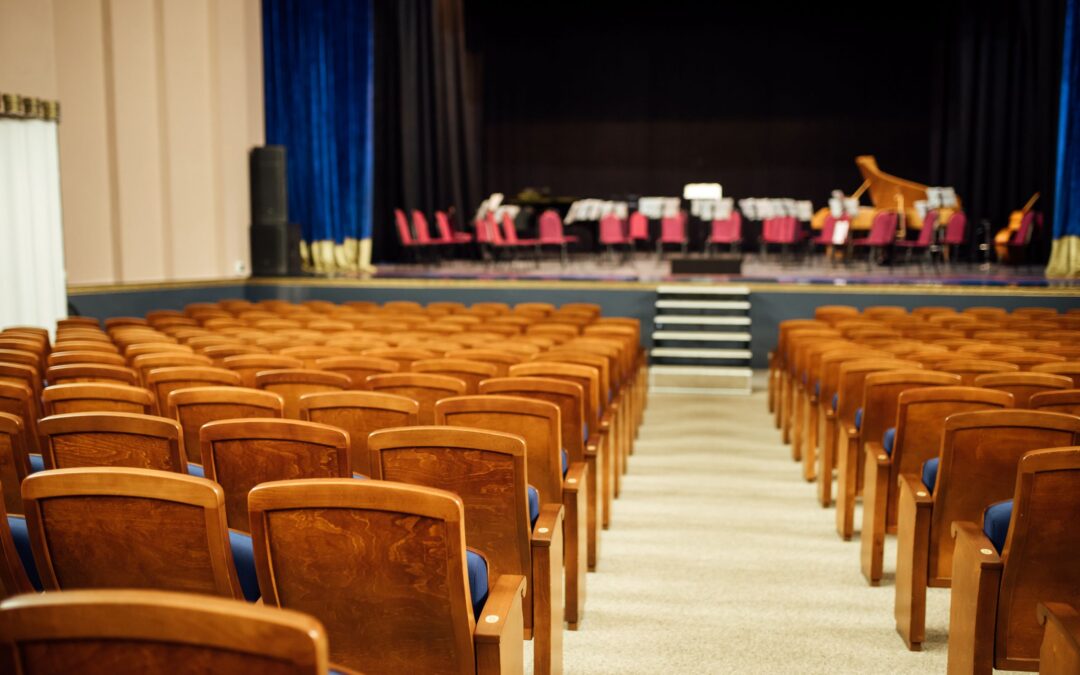
Last month, when I facilitated my mentoring sessions at Classical:NEXT in Budapest on Design Thinking for music organisations, I wanted to start with a problem that would feel immediately familiar to musicians, ensembles, and cultural professionals, regardless of the size of their organisation. So I wrote one sentence on the flipchart: “We perform to the same audience every time.”
Almost everyone in the music sector understands this sentence. Maybe your concerts are good. Maybe the artistic quality is high. Maybe your loyal audience keeps coming back, supports your work, and cares deeply about what you do. And yet, when you look around the room, you realise that the audience is not really changing. The same people return, but new people do not arrive. Younger audiences, different communities, occasional cultural visitors, or people who might actually enjoy the experience are somehow still outside the circle.
The immediate reaction is often practical: we need better marketing. We need more visibility. We need a stronger social media strategy. We need better posters, more newsletters, clearer ticket offers, maybe a discount, maybe a campaign. And of course, all of these things can matter. Communication matters. Visibility matters. But during the session, I wanted to explore a different possibility: what if this is not only a marketing problem? What if it is also a human problem, an experience problem, and a relevance problem?
This is where Design Thinking can be useful.
Starting with the Audience, Not the Solution
Design Thinking is a human-centred, iterative approach to problem-solving. In the context of music organisations, it helps us understand stakeholders more deeply, clarify the real challenge, generate possible solutions, and test small ideas before committing to larger ones. It is a five-step structure: Empathize, Define, Ideate, Prototype, and Test.
What I find powerful about Design Thinking is that it slows us down at exactly the moment when we usually want to speed up. When we feel a problem, we want to solve it immediately. If people are not coming, we want to promote more. If they do not understand, we want to explain more. If the audience is ageing, we want to “reach young people.” If the concert hall is not full, we want a new campaign.
But Design Thinking asks us to pause and begin somewhere else.
Who are we actually trying to reach? What do we know about them? What are we only assuming? What might they feel before they even decide whether to attend? What might stop them? What are they choosing instead? What would make the experience feel meaningful, welcoming, or worth their time?
These questions sound simple, but they change the direction of the conversation. Instead of starting from our need — “we need more audience” — we start from their experience. That shift is small, but it is significant.
The Problem Beneath the Problem
In the mentoring session, we worked with the shared challenge: “We perform to the same audience every time.” The group did not work individually on separate cases; instead, we built one example together, step by step, using the Design Thinking process from the handout. The aim was not to create a perfect strategy in one hour, but to experience a different way of thinking. The final agenda moved through framing, a shared problem, a co-created design sprint, and a reflection round.
The first step was empathy. We imagined a target audience: culturally curious people, perhaps between 25 and 45, who attend cultural events occasionally but do not regularly go to classical music concerts. This is an important audience to think about because they are not necessarily uninterested. They may go to theatre, cinema, exhibitions, literary events, festivals, talks, or interdisciplinary performances. They may enjoy live experiences. They may be open, curious, and willing to try something new.
And yet, they do not come.
The easy explanation would be: “They are not interested in classical music.” But that answer is too quick. It closes the conversation before we have learned anything. A more useful question is: what might be stopping them?
Maybe they do not know what to expect. Maybe they think classical music is not for them. Maybe they worry they will not understand it. Maybe the language around the concert feels too formal or too technical. Maybe the venue feels intimidating. Maybe they do not see a personal reason to choose this event over dinner with friends, a film, a club night, or simply staying home after a long workday. Maybe they are not rejecting the music at all; maybe they are not yet receiving an invitation that feels relevant.
That distinction matters.
Because if the problem is “they are not interested,” we can only try harder to convince them. But if the problem is that the experience does not yet feel relevant, welcoming, or easy to enter, then we have many more possibilities.
Asking a Better Question
One of the most important moments in a Design Thinking process is the shift from problem to challenge. In the session, we asked: what is the real challenge behind “we perform to the same audience every time”?
The first version of the question might be: “How do we get more audience?”
It is a normal question. Many organisations ask it. But it is also too broad and too organisation-centred. It starts from what we want: more people in the room.
A stronger version is:
“How might we make our concerts feel relevant, welcoming, and worth choosing for new audiences?”
This question opens much more space. It includes the audience. It includes the experience. It includes choice. It also recognises that people do not attend concerts in a vacuum. They choose between many possible ways to spend their evening, their money, their attention, and their emotional energy.
The phrase “How might we…” is useful because it keeps the question open. It does not assume there is one correct answer. It invites exploration. It also gives enough structure to begin creating ideas. In our case, the question helped move the conversation away from “How do we sell more tickets?” and towards “What kind of experience would make someone want to enter, stay, connect, and perhaps return?”
That is a very different conversation.
From Ideas to Experiments
Once the challenge was clearer, we moved into ideation. This is often the part that feels most energetic, because people begin to see possibilities. But it is also the part where we need to suspend judgment for a moment. If every idea is immediately evaluated according to budget, staffing, risk, tradition, or whether it has been done before, the process becomes narrow very quickly.
So the invitation was simple: generate ideas first. Judge later.
What could help a new audience feel more welcome? What could make the event easier to enter? What could make the music feel more connected to their lives? What could change before, during, or after the concert?
Ideas might include a shorter themed concert, an informal venue such as a café or gallery, storytelling between pieces, a drink and conversation after the performance, a “bring a friend” invitation, a first-time audience welcome, a collaboration with a community outside the classical music world, or programme notes written in everyday language rather than institutional language.
None of these ideas is revolutionary on its own. That is not the point. The point is to move from abstract concern to concrete possibility.
And then comes the step many organisations skip: prototyping.
In Design Thinking, a prototype is not the final version of a project. It is a small experiment designed to help us learn. This is especially important in the cultural sector, where we often turn ideas into large projects too quickly. A small thought becomes a programme. A programme becomes a funding application. A funding application becomes a public promise. And before we have tested whether the idea actually works for the people we want to reach, the whole thing has become too big to change.
A prototype protects us from that.
For example, instead of launching a full new concert series for new audiences, we could test one informal 60-minute concert in a café with short storytelling between pieces and a drink included. We could invite a small number of people who do not usually attend classical concerts. We could observe what happens. We could ask simple questions afterwards: What surprised you? What did you enjoy most? What felt unclear? Would you come again? Would you bring someone with you?
That is already enough to learn something.
This is not a project. It is an experiment.
And that mindset can be liberating. It lowers the pressure. It allows us to try something without pretending that we already know the answer. It also helps teams move forward when resources are limited, because the first step does not have to be large. It only has to be real enough to teach us something.
Learning Instead of Proving
The final step is testing and reflection. This may sound obvious, but in practice it is often difficult. Many organisations ask for feedback only after a project has already happened, and even then, they may ask questions that are too general: Did you like it? Was it good? Would you recommend it?
Design Thinking encourages a more curious approach.
The purpose of testing is not to prove that our idea was brilliant. The purpose is to learn what happened between the idea and the people it was meant for.
Maybe the informal setting helped people relax. Maybe the storytelling made the music more accessible. Maybe the audience enjoyed the concert but still found the invitation unclear. Maybe they liked the idea of coming with a friend. Maybe they wanted more context before the event, not during it. Maybe the title of the concert did not communicate the emotional experience at all. Maybe the music was not the barrier; maybe the whole frame around it was.
Each of these insights is useful.
This is why small experiments matter. They create feedback before we become too attached to one solution. They help us improve. They also help us build audience relationships based on listening rather than guessing.
Why This Matters for Musicians and Music Organisations
Audience development is often discussed as if it were mainly about growth: more people, more visibility, more engagement, more attendance. But I think the deeper question is about relationship.
Who do we want to be in relationship with? What kind of invitation are we creating? What do people need in order to feel that this experience could be for them? How can we preserve artistic depth while making the entry point more human?
For me, this is the value of Design Thinking in the music sector. It helps us move from assumption to curiosity, from pressure to experimentation, and from abstract strategy to small practical steps.
If you’re thinking about how to navigate change in your organisation, artistic career, or rethink the way you connect with audiences — let’s talk. Reach out at hello@ebodnar.com.
hello@ebodnar.com
Follow
Monthly postcards
Inspiring stories, life and work design tips, book recommendations and so on – right in your inbox.